The 7th International Workshop on

Agents for Societal Impact (ASI)

Paphos, Cyprus.   25 May 2026.
In conjunction with the 25th International Conference on Autonomous Agents and Multiagent Systems (AAMAS)

About

The 7th International Workshop on Agents for Societal Impact (formerly Autonomous Agents for Social Good) will be held in conjunction with the 25th International Conference on Autonomous Agents and Multiagent Systems (AAMAS 2026) in 25 May 2026 in Paphos, Cyprus.

This workshop focuses on the design, analysis, and deployment of intelligent agents that contribute positively to society. As AI agents become increasingly autonomous and embedded in real-world systems, it is critical to ensure that their behavior aligns with human values and societal goals, rather than optimizing narrowly defined technical objectives. The workshop provides a forum to discuss how agent-based technologies can be responsibly applied to real-world societal systems, including (but not limited to):

Topics of Interest

  • Public health and healthcare
  • Education
  • Climate, sustainability, conservation
  • Transportation and mobility
  • Public infrastructure, smart cities, smart grids
  • Supply chains and logistics
  • Emergency response and disaster management
  • Agriculture and food systems
  • Labor markets and the future of work
  • Housing and land-use planning
  • Ethics, fairness, and discrimination
  • Online information integrity and misinformation
  • Security and cybersecurity
  • Governance, policy design, and decision support

Societal impact cannot be achieved through algorithmic optimization alone. Progress requires an integrated perspective that connects agent engineering (how agents are built), computational social science (how social systems are modeled and studied), and human agent interaction (how agents work with people). Therefore, we welcome researchers working on agents and society across AI, empirical social science, and public policy.

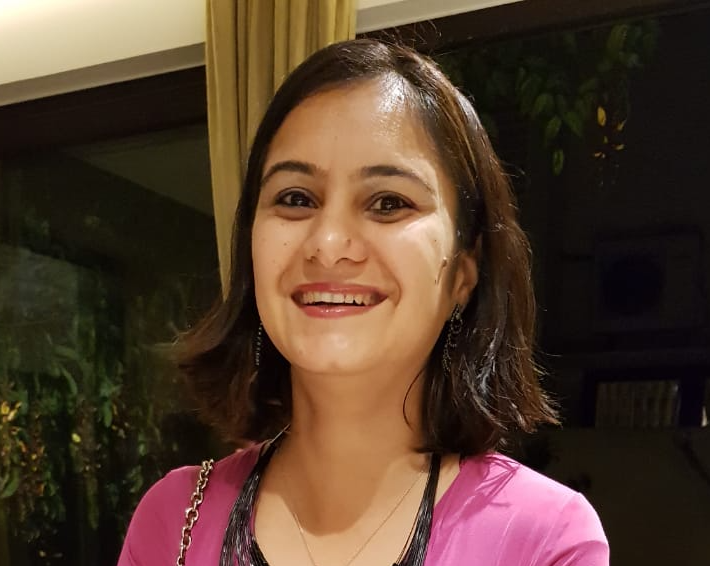
For any questions related to the workshop, please contact Panayiotis Danassis at P.Danassis [at] soton.ac.uk

Call for Papers

Submission Information at a Glance

Submission site
Format
AAMAS (single-blind)
6-8 pages for research papers
4 pages for position papers
Key dates
  • Submission deadline: Feb 11 Feb 18, 2026 (AoE)
  • Notification: Mar 20, 2026 Mar 27, 2026
  • Registration deadline: Early (up to 31 Mar 2026), Late (01 Apr – 29 May 2026)
  • Workshop date: May 25, 2026

Detailed Information

We invite papers (work-in-progress, or published works with interesting novelty) in two categories:

1. Research papers describing novel contributions using multi-agent systems in societal challenges. Both work-in-progress and recently published work will be considered. Submissions describing recently published work should clearly indicate the earlier venue and provide a link to the published paper. Papers in this category should be at most 6-8 pages (in AAMAS format), with any number of additional pages containing bibliographic references only.

2. Position papers describing open problems or neglected perspectives in the field, proposing ideas for bringing MAS methods into a new application area, or summarizing the focus areas of a group working on MAS for societal challenges. Papers in this category should be at most 4 pages (in AAMAS format), with any number of additional pages containing bibliographic references only.

The submitted papers will be assessed based on their novelty, technical quality, potential impact, and clarity of writing. Collaboration with NGOs and society stakeholders that have first-hand knowledge of the topic will be especially appreciated.

Please note that at least one author must register for the workshop and attend in person. This workshop has no archival proceedings, and the accepted papers are allowed to be submitted to other conference venues. Accepted submissions will have the option of being posted online on the workshop website. For authors who do not wish their papers to be posted online, please inform the organizers. We also welcome papers accepted at other venues to facilitate discussion.

Invited Speakers

Joel Z Leibo

Joel Z Leibo

Google DeepMind

Bio: Joel is a senior staff research scientist at Google DeepMind and visiting professor at King's College London. He obtained his PhD from MIT where he studied computational neuroscience and machine learning with Tomaso Poggio. Joel is interested in reverse engineering human biological and cultural evolution to inform the development of artificial intelligence that is simultaneously human-like and human-compatible. In particular, Joel believes that theories of cooperation from fields like cultural evolution and institutional economics can be fruitfully applied to inform the development of ethical and effective artificial intelligence technology.
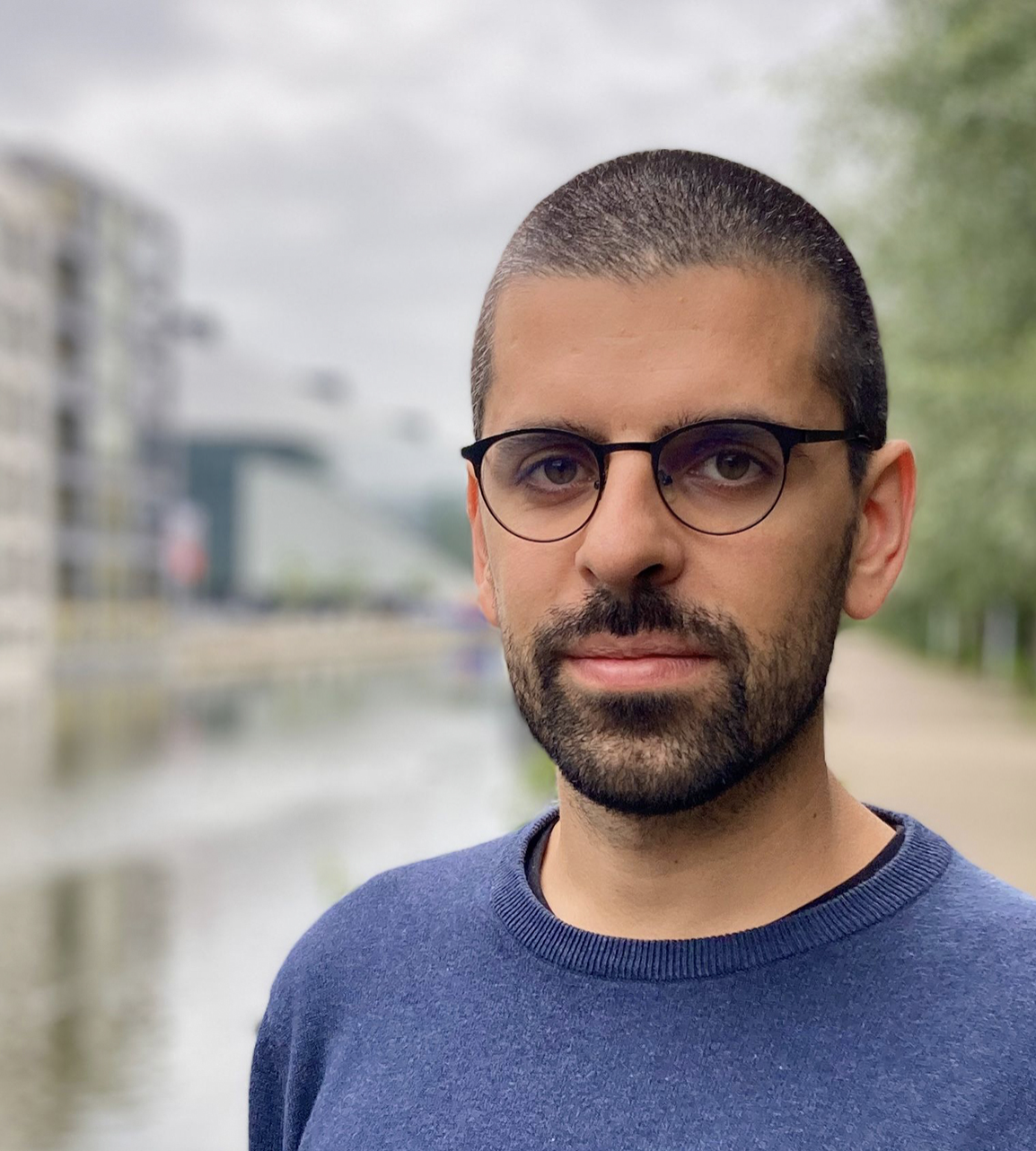
Fernando P. Santos

Fernando P. Santos

University of Amsterdam

Bio: Fernando is an Associate Professor at the Informatics Institute of the University of Amsterdam. He is part of the SIAS group, where he leads the Prosocial Dynamics Lab and he is a scientific lab manager of the Civic AI Lab.

His research lies at the interface of AI and Complex Systems: he studies behavioral dynamics in systems of adaptive learning agents and aim at designing prosocial/fair AI.

Previously, he was a Postdoctoral Fellow at Princeton with Simon A. Levin, supported by a James S. McDonnell Foundation Fellowship. He completed his PhD in Computer Science and Engineering (2018) at Instituto Superior Técnico with Francisco C. Santos, Jorge M. Pacheco, and Ana Paiva; his work received the Victor Lesser Dissertation Award (2018), the APPIA Best Thesis in AI (2017-2018) and the INESC-ID PhD Student award (2018). He was selected for the AAAI-23 New Faculty Highlights program.

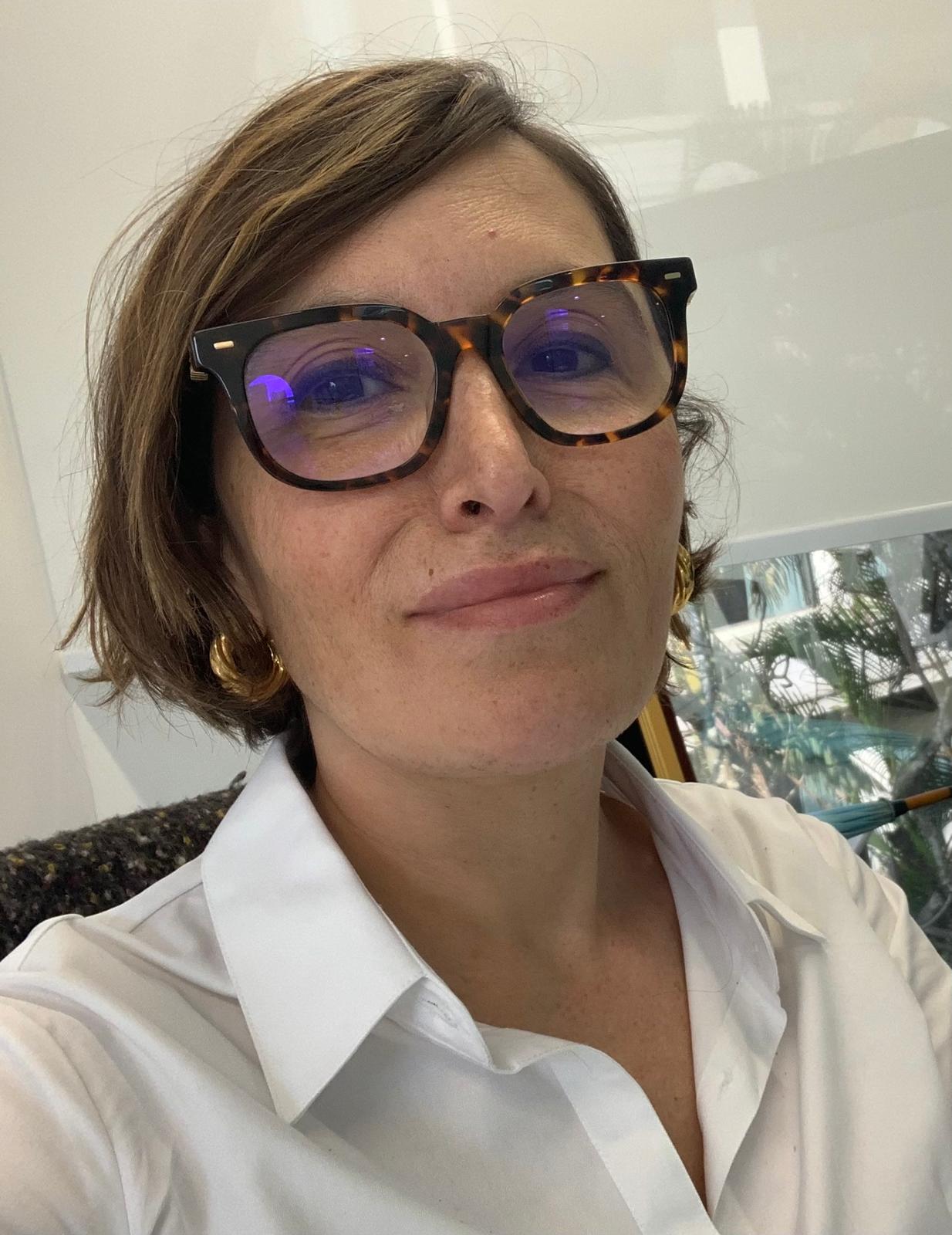
Georgina Curto

Georgina Curto

United Nations University

Bio: Georgina Curto is a Senior Researcher and Team Lead at the United Nations University Institute in Macau. She is the PI of international research projects on agentic AI that support inclusive economic and social development, in collaboration with the United Nations Economic and Social Commission for Western Asia (UN ESCWA). Georgina Co-Chairs the IJCAI AI and Social Good Symposia in the Global South, volunteers as a member of the organizing committee at the IndabaX Spring School on multi-agent systems, in Uganda, as well as at the pan-African Deep Learning Indaba.

Her research is at the interface of agentic AI and development economics. She focuses on building multi-agent systems that support policymakers with evidence for equitable and sustainable growth. Her research was awarded “Best AI for Good Project” at IJCAI, among other recognitions.

Previously, she was an Assistant Research Professor at the Lucy Family Institute for Data and Society (University of Notre Dame), a Visiting Scholar at the Kavli Center for Ethics, Science and the Public (UC Berkeley) and a Postdoc at the ND-IBM Technology Ethics Lab (University of Notre Dame).

Programme

Times below in local time (Cyprus Time)

8:45-10:15   Session 1 (1.30)

8:45 - 8:50
Welcome
8:50 - 9:40
Keynote 1: Joel Z Leibo (40mins + 10mins QnA)
9:40 - 10:16
Paper Presentations (x3 10mins + 2mins QnA)
  • Yohai Trabelsi, Guojun Xiong, Fentabil Getnet, Stéphane Verguet and Milind Tambe. Health Facility Location in Ethiopia: Leveraging LLMs to Integrate Human-AI Alignment into Algorithmic Planning
  • Vincenzo Auletta, Diodato Ferraioli and Grazia Ferrara. Influence Maximization in Unknown Social Networks: A Contextual Bandit Approach
  • Nikolaos Lazaridis and Pinar Yolum. Agent-Based Auditing of Online Platforms for Algorithmic Manipulative Personalization

10:15-11:00   Coffee break (45)

11:00-12:30   Session 2 (1.30)

11:00 - 11:50
Keynote 2: Georgina Curto (40mins + 10mins QnA)
11:50 - 12:26
Paper Presentations (x3 10mins + 2mins QnA)
  • Elsa Donnat. Designing Governable Agent Economies: A Coupled Design Space
  • Guilherme Santos and Pedro Campos. TERRA - Trade, Equity Resource Redistribution in Agriculture - An Agent-Based Model for Drought-Prone Areas
  • Stefan Roesch, Yali Du, Stefanos Leonardos and Odinaldo Rodrigues. Emergent Cooperation via Participation-Driven Partner Choice in Low-Information Social Dilemmas

12:30-14:00   Lunch (1.30)

14:00-15:30   Session 3 (1.30)

14:00 - 14:36
Paper Presentations (x3 10mins + 2mins QnA)
  • Anastasia Psarou, Łukasz Gorczyca, Dominik Gaweł and Rafał Kucharski. Autonomous vehicles need social awareness to find optima in multi-agent reinforcement learning routing games.
  • Stefano Livella, Luca Bolis, Sabrina Patania, Matteo Papini, Kenji Morita and Dimitri Ognibene. Modelling and Mitigating Problematic Social Media Use through Paired Recommender Systems with Contrasting Objectives
  • Guojun Xiong, Mauricio Tec, Haichuan Wang and Milind Tambe. Rule-Bottleneck RL: Learning to Decide and Explain for Sequential Resource Allocation via LLM Agents
14:36 - 15:30
Poster Session

15:30-16:15   Coffee break (45)

16:15-17:45   Session 4 (1.30)

16:15 - 17:05
Keynote 3: Fernando P. Santos (40mins + 10mins QnA)
17:05 - 17:41
Paper Presentations (x3 10mins + 2mins QnA)
  • Oskar Bohn Lassen, Serio Angelo Maria Agriesti, Filipe Rodrigues and Francisco Camara Pereira. Climate Surrogates for Scalable Multi-Agent Reinforcement Learning: A Case Study with CICERO-SCM
  • Federico Gabriele, Aldo Glielmo and Marco Taboga. Heterogeneous RBCs via deep multi-agent reinforcement learning
  • Sabrina Guidotti, Gregor Donabauer, Davide Taibi, Giuseppe Vizzari, Udo Kruschwitz and Dimitri Ognibene. Introducing a Novel Framework for Recognizing Social Media Recommenders Under Absent Recommendations and a First Graph Neural Network-Based Implementation
17:41 - 17:45
Closing Remarks

Accepted Papers

  1. Yohai Trabelsi, Guojun Xiong, Fentabil Getnet, Stéphane Verguet and Milind Tambe. Health Facility Location in Ethiopia: Leveraging LLMs to Integrate Human-AI Alignment into Algorithmic Planning
  2. Canyu Chen, Kangyu Zhu, Zhaorun Chen, Zhanhui Zhou, Shizhe Diao, Yiping Lu, Tian Li, Manling Li and Dawn Song. Federated Agent Reinforcement Learning
  3. Yixuan Yuan, Dedai Wei, Chudong Qian, Ziyue Lin, Yuheng Zhao and Xinwu Ye. Hedging the Black Box: A Feasibility Study of Financial Risk Transfer for AI Adoption via Generative Agent Simulation
  4. Or Bachar, Or Levi, Sardhendu Mishra, Adi Levi, Manpreet Singh Minhas, Justin Miller, Omer Ben-Porat, Eilon Sheetrit and Jonathan Morra. LLM Performance Predictors: Learning When to Escalate in Hybrid Human-AI Moderation Systems
  5. Anastasia Psarou, Łukasz Gorczyca, Dominik Gaweł and Rafał Kucharski. Autonomous vehicles need social awareness to find optima in multi-agent reinforcement learning routing games.
  6. Stefan Roesch, Yali Du, Stefanos Leonardos and Odinaldo Rodrigues. Emergent Cooperation via Participation-Driven Partner Choice in Low-Information Social Dilemmas
  7. Oskar Bohn Lassen, Serio Angelo Maria Agriesti, Filipe Rodrigues and Francisco Camara Pereira. Climate Surrogates for Scalable Multi-Agent Reinforcement Learning: A Case Study with CICERO-SCM
  8. Syed Rafi Ahmed. Multi-Agent Systems for Economic Justice: Open Problems in Democratizing AI-Driven Decision Support for SMEs
  9. Nikolaos Lazaridis and Pinar Yolum. Agent-Based Auditing of Online Platforms for Algorithmic Manipulative Personalization
  10. Julio Cesar Dos Reis. Agentic Learning Ecosystem for Open, Negotiated, and Accountable Education
  11. Guojun Xiong, Mauricio Tec, Haichuan Wang and Milind Tambe. Rule-Bottleneck RL: Learning to Decide and Explain for Sequential Resource Allocation via LLM Agents
  12. Guilherme Santos and Pedro Campos. TERRA - Trade, Equity Resource Redistribution in Agriculture - An Agent-Based Model for Drought-Prone Areas
  13. Federico Gabriele, Aldo Glielmo and Marco Taboga. Heterogeneous RBCs via deep multi-agent reinforcement learning
  14. Itay Segev and Sarah Keren. Multi Perspective Actor Critic: Adaptive Value Decomposition for Robust and Safe Reinforcement Learning
  15. Andrew Poile, Baharak Rastegari, Sebastian Stein and Vahid Yazdanpanah. A Stable and Student-Optimal School Choice Mechanism with Transportation
  16. Vincenzo Auletta, Diodato Ferraioli and Grazia Ferrara. Influence Maximization in Unknown Social Networks: A Contextual Bandit Approach
  17. Sabrina Guidotti, Gregor Donabauer, Davide Taibi, Giuseppe Vizzari, Udo Kruschwitz and Dimitri Ognibene. Introducing a Novel Framework for Recognizing Social Media Recommenders Under Absent Recommendations and a First Graph Neural Network-Based Implementation
  18. Mrishika Nair, Georgios Ioannides, Jeremy Roghair, Rohit Thekkanal, Huan Song, Hannah Marlowe and Sharlina Keshava. Joint Contrastive-Generative Architecture for Domain-Specific Multi-Agent Orchestration in Clinical Decision Assistance
  19. Stefano Livella, Luca Bolis, Sabrina Patania, Matteo Papini, Kenji Morita and Dimitri Ognibene. Modelling and Mitigating Problematic Social Media Use through Paired Recommender Systems with Contrasting Objectives
  20. Ivan Puga-Gonzalez, Önder Gürcan, Vanja Falck, Christopher Frantz, F. Leron Shults, David Herbert, Larissa Lopes Lima and Markus Grendstad Rousseau. A Multi-Level Agent-Based Architecture for Climate Governance Integrating Cognitive and Institutional Dynamics
  21. Lokesh Singh, Athina Georgara, Jayati Deshmukh, Tan Viet Tuyen Nguyen and Sarvapali D Ramchurn. Decision-Level Fusion for Robust Wearable Affect Recognition
  22. Elsa Donnat. Designing Governable Agent Economies: A Coupled Design Space
  23. Keeheon Lee, Kunhee Ryu and Hogyun Yoo. Manners Maketh MAN: Multi-Agent Norm Dynamics under Cultural Moral Values
  24. Mariam Afonso, Iohan Sardinha, Jadna Cruz, Thiago Sobral and Rosaldo Rossetti. Simulating Nudging Policies for Sustainable Urban Mobility
  25. Filippo Gasco, Nicolo' Luigi Allegris, Stefano Livella, Luca Bolis, Sabrina Guidotti and Dimitri Ognibene. Beyond Personalization: Multi-User Recommender Dynamics and Robust Mitigation of Social Media Addiction
  26. Jari Ala-Ruona, Harko Verhagen, Claes Granmar, Joakim Hedenstedt and Outi Korhonen. Reconfiguring the social turn of multi-agent systems research in the age of agentic genAI
  27. Vrinda Malhotra. Spillover-Aware Integrity for Human-AI Platform Governance: Why Single-Platform Metrics Fail and What to Measure Instead
  28. Zeina Elrawashdeh, Amir Sartipi, Igor Tchappi and Afshin Khadangi. Agentic Science: Orchestrating MAS and LLMs for Multidisciplinary to Transdisciplinary Discovery

Organising Committee

Webpage created with ChatGPT 5.2.